The V60 is a cone with spiral ribs and a single large hole. That shape lets water through quickly, so the result depends a lot on how you pour. Done well, it gives a clean, very aromatic cup.
It is one of the favourite methods in specialty coffee shops precisely because it hides nothing: whatever the bean has reaches the cup. That also means it demands a little more attention than other brewers. With this guide you will have a starting recipe and know what to adjust when the cup does not come out as expected.
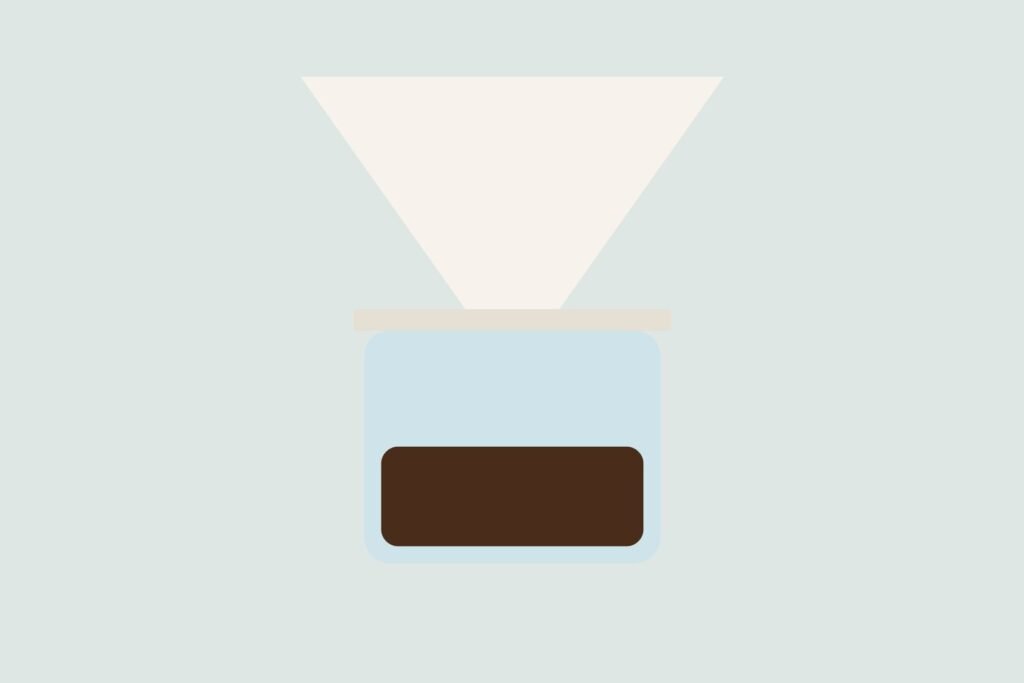
What you need
- V60 cone and paper filters.
- Scale with a timer.
- Gooseneck kettle.
- 15 g of coffee at a medium grind.
The gooseneck kettle is not a whim: it lets you pour a thin, controlled stream, which is exactly what this cone needs. The scale is not optional either if you want repeatable results. Eyeballing works one day, but it does not tell you what changed when the next coffee comes out different.
The filter
Use paper filters made for the V60, with their conical shape. Before adding the coffee, rinse it with hot water: you remove the papery taste and warm up the cone and the server at the same time. Pour that water away before you start, or it will end up mixed with the coffee. White filters usually leave less taste than unbleached brown ones, which are worth rinsing with more water.
Base recipe
Use 15 g of coffee for 250 ml of water at 93 °C. The total time should land between 2:30 and 3:00 minutes.
To start, pick a light roast: it highlights the acidity and fruity notes this method brings out so well. Ethiopian coffees, with their notes of jasmine, bergamot or peach, are among those that shine most in this cone.
If your coffee is more than three weeks old, raise the temperature a couple of degrees and grind a notch finer: a less fresh bean extracts with more difficulty. And if you are brewing for two, double the coffee and water, but expect the total time to stretch by about thirty seconds because of the thicker bed.
The bloom
Pour 45 ml of water and wait 30 seconds. The coffee swells and releases gas, which prepares an even extraction. If the coffee is very fresh you will see bubbles and a growing dome; if it barely moves, it was probably roasted weeks ago.
The pours
Add the rest in two pours in circles, without touching the paper. Finish pouring around the 1:45 mark.
Keep the water level more or less constant and pour in the centre, widening the spiral outwards without reaching the edge. At the end, give the cone a little swirl so the coffee bed ends up flat: a smooth surface is a sign the water passed through evenly.
How to adjust the recipe
The base recipe is just a starting point. Once you master it, you can play with the ratio, the number of pours or the temperature. Always change one variable at a time and write down the result, or you will get lost among cups you cannot repeat.
- More body: raise the dose to 16 or 17 g while keeping the water.
- A lighter cup: grind a little coarser and reduce the dose.
- More sweetness: split the water into three pours instead of two.
- Less bitterness: lower the temperature to 90 °C.
Common mistakes
If it takes more than three minutes and tastes bitter, grind coarser. If it drains in under two and tastes sour and watery, grind finer. And do not neglect the water you use: it is 98% of the cup.
Another common mistake is using coffee that has been open for weeks. The V60 quickly gives away a tired bean: the cup comes out flat and without aroma. Buy little and keep the coffee in an airtight jar, in a cool cupboard away from light.
You should not pour straight onto the paper either. The water finds an easy path there, goes around the coffee without passing through it and the extraction ends up uneven. If you see the level dropping faster at the sides than in the centre, bring the stream towards the middle.
Finally, do not obsess over the first cup. This cone rewards practice: after a week of daily brews you will have a steadier hand with the kettle and learn to tell, from the colour and speed of the drip, whether you are on the right track.
V60, French press or cold brew
If you fancy a cup with more body that is less demanding on technique, the French press is a good alternative for busy days. And in summer, cold brew makes the most of the same fruity coffees in a cold, sweet version. Having several methods at home is not a luxury: each one teaches you something different about the same bean.
Leave a Reply